Lighting and fixture installation
Install ceiling lights, pendants, chandeliers, wall lights, recessed lighting, under-cabinet lighting and other fixtures after checking support, box condition, wiring and control needs.

Get practical help with new fixtures, failed lights, LED retrofits, dimmers, smart controls, exterior lighting and commercial lighting. The work is planned around the room or site, existing wiring, fixture specifications, ceiling access, weather exposure and how the lighting needs to perform after dark.

A lighting electrician can install or replace fixtures, add lighting outlets and switching, diagnose flickering or failed circuits, upgrade older lighting to LED, install compatible dimmers and controls, and plan exterior or commercial lighting. The right scope depends on whether the existing wiring and electrical box can support the fixture, whether a new circuit or control cable is needed, and whether the location is dry, damp, wet, cold or difficult to access.
Replacing one dining-room fixture is different from adding pot lights, troubleshooting a flickering circuit or upgrading a store. Clear project details make it easier to identify the useful next step and avoid buying fixtures that do not fit the location.
Install ceiling lights, pendants, chandeliers, wall lights, recessed lighting, under-cabinet lighting and other fixtures after checking support, box condition, wiring and control needs.
Investigate flickering, intermittent operation, failed switches, tripping breakers, buzzing, overheated devices, damaged fixtures and groups of lights that stop working together.
Replace inefficient or difficult-to-maintain lighting with practical LED fixtures or lamps selected for brightness, colour temperature, dimming, glare and the way the room is used.
Plan compatible dimmers, occupancy sensors, timers, photocells and smart controls while checking neutral requirements, fixture compatibility, load type and multi-location switching.
Improve entrances, walkways, garages, yards, loading areas and parking zones with weather-suitable fixtures, sensible placement and controls that reduce unnecessary glare.
Support offices, retail spaces, restaurants, warehouses and managed properties with lighting repairs, retrofits, controls, maintenance access and work scheduled around operations.

Fixture weight, ceiling height, box support, dimmer compatibility, colour temperature, beam spread and weather rating can change the installation. For renovations, the route between switches, fixtures and the panel may matter as much as the fixture itself.
For a faster quote: include the Regina address, room or exterior area, number of fixtures, fixture photos or model numbers, ceiling height, preferred timing and whether wiring already exists at each location.
Regina projects range from older homes with finished plaster and past alterations to newer open-concept homes, detached garages, commercial bays and exposed outdoor locations. The useful solution should account for access, winter darkness, cold starts, snow, wind, moisture and how people move through the property.
Homes in Cathedral, Lakeview, Heritage, Rosemont and other established areas may have limited ceiling access, older boxes, mixed renovation history or switch locations that do not match a modern lighting plan.
Projects in Harbour Landing, Greens on Gardiner and other newer areas often focus on layered lighting, larger kitchens, feature fixtures, dimming, smart controls and outdoor living areas.
Detached garages, side yards and rear lanes need fixture placement that supports visibility without directing excessive glare toward neighbouring windows or the street.
Outdoor fixtures and controls should suit the location, cold temperatures, moisture and physical exposure. Snow buildup and seasonal access also affect practical mounting and maintenance.
Durable fixtures, repeatable lamp types, accessible controls and clear maintenance expectations can reduce recurring service calls across suites and common areas.
Retail, office, restaurant and warehouse projects may need phased work, lift access, after-hours scheduling or temporary lighting to limit disruption.
The goal is not simply to energize a fixture. Good planning also considers switching, glare, brightness, service access, finishing work and how the lighting feels when the room or site is actually in use.
Share what is wrong now or what you want to improve, along with photos, fixture information, room use, preferred control and project timing.
Check accessible wiring, boxes, supports, switches, panel information, ceiling or exterior access and conditions that may affect installation.
Clarify fixture supply, compatibility, wiring changes, wall or ceiling openings, access equipment, permit needs and any work by other trades.
Complete the approved work, test switching and controls, review operation and identify any lamp, dimmer, maintenance or finishing information.
A failed lamp is simple. Repeated flickering, grouped failures, buzzing, heat or breaker trips may point to a switch, dimmer, connection, driver, circuit or supply issue. Replacing the fixture without diagnosing the cause can leave the original problem in place.
Stop using the affected circuit when there is smoke, sparking, a burning smell, severe overheating or visible damaged wiring. Keep people away, call 639-710-0400 and contact emergency services when there is an immediate fire or life-safety risk.
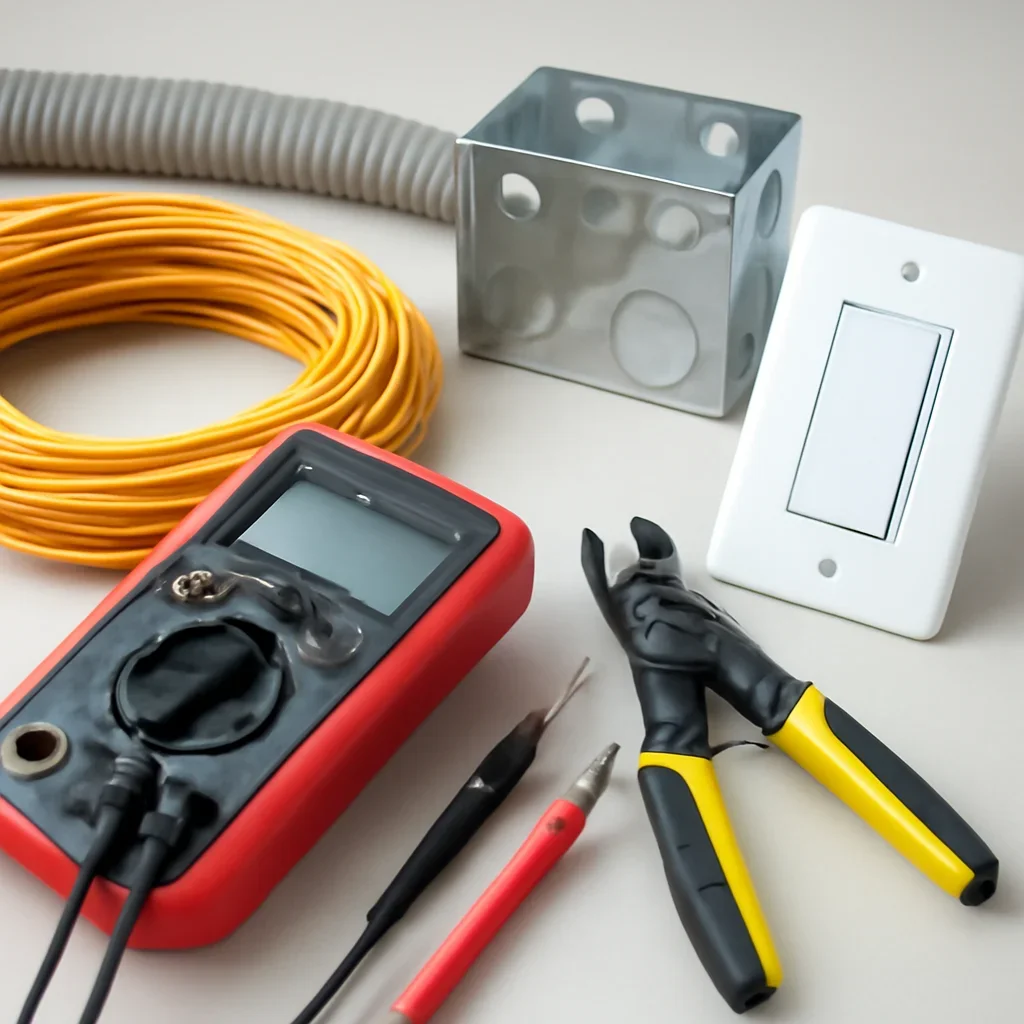
One bright fixture rarely solves every need. Layering general, task, accent and exterior lighting can provide better visibility while giving each area an appropriate level of control.
Combine general light with practical task lighting at counters, islands, sinks, desks and workbenches while controlling shadows and glare.
Use dimming and separate lighting layers to support conversation, dining, television, reading and feature areas without relying on one fixed brightness.
Prioritize even visibility, suitable fixture locations and controls that are easy to reach when moving through the home at night.
Illuminate doors, steps, pathways, garages and parking areas while considering weather exposure, neighbouring properties, cameras and automatic controls.

Modern lighting is easier to compare when brightness, colour, control and location are considered separately. Product packaging and fixture specifications can prevent compatibility problems before installation day.
Browse the complete electrical service directory when lighting is part of a larger renovation, panel, repair or property-improvement project.
TSASK administers electrical permits, inspections and contractor licensing in Saskatchewan. Permit needs depend on the work being completed. Larger Regina renovations, additions, tenant improvements, changes of use and fire-alarm work may also involve City of Regina approvals.
Adding lighting outlets, changing circuit wiring or completing a larger retrofit can involve different permit and inspection requirements than replacing a fixture at an existing outlet.
Coordinate framing, insulation, drywall, millwork, painting and ceiling work so wiring can be installed and inspected at the appropriate stage.
Commercial renovations may require drawings, building approvals, access coordination and separation between general lighting, emergency lighting and fire-alarm work.
Lighting requests can be reviewed for houses, condos, rentals, offices, retail spaces, restaurants, warehouses and managed properties across Regina, White City, Emerald Park, Pilot Butte and nearby areas.
Coordinate lighting with outlets, switches, renovations, kitchens, basements, garages and other residential electrical work.
Check service coverage and share the property address, project type and access details when requesting a lighting appointment.
Direct answers about fixture installation, quotes, flickering lights, dimmers, LEDs, exterior fixtures, permits and project preparation.
Yes, when the fixture is suitable for the location and compatible with the existing electrical outlet, support and wiring. Send the fixture model or installation sheet, a photo of the current fixture and the ceiling height before the appointment. Extra support, wiring, controls or finishing work may change the scope.
Flickering can come from a loose lamp, incompatible dimmer, failing LED driver, switch, connection, circuit issue or voltage change when equipment starts. The pattern matters: note which lights flicker, when it happens and whether heat, buzzing, breaker trips or other symptoms occur.
Often, but the route for wiring, ceiling construction, joist direction, insulation, access and switching must be reviewed. Some projects can use accessible attic or basement routes, while finished ceilings may require carefully planned openings and later drywall or painting work.
Dimmable LED products should be paired with a compatible control designed for the fixture or lamp and the electrical load. Incompatible combinations can cause flicker, buzzing, limited dimming range or lights that do not shut off normally.
The fixture and controls should be selected for the actual location, temperature range, moisture and physical exposure. Placement should also account for snow, access, neighbouring windows and the area that needs visibility. Product specifications should be reviewed rather than assuming every exterior-looking fixture suits every outdoor location.
Permit needs depend on the scope. Replacing a fixture at an existing approved outlet is different from adding wiring, circuits or a larger lighting retrofit. TSASK administers electrical permits and inspections in Saskatchewan. Broader renovations or commercial tenant improvements may also involve City of Regina approvals.
Yes. The decision should reflect room size, surfaces, ceiling height, task, existing daylight, fixture distribution and the appearance you prefer. It is also useful to keep colour temperature consistent across connected rooms unless a deliberate contrast is planned.
Straightforward fixture replacements may be discussed from clear photos and product details. New locations, recessed lighting, exterior circuits, troubleshooting and larger retrofits usually need more information or an on-site assessment before an accurate scope can be prepared.
Send the Regina property address, room or exterior area, number of fixtures, photos of existing fixtures and switches, product links or model numbers, ceiling height, access details, desired controls and preferred timing. Explain whether this is a new installation, replacement, retrofit or repair.
Share the address, room or exterior area, number of fixtures, photos, fixture models, ceiling height, control preferences and timing. Explain whether the work is a new installation, repair, LED upgrade or larger renovation so the request can be reviewed against the actual site.