Fan-rated support
The existing box and framing must be suitable for the fan’s weight and movement. A light-duty box may need to be replaced or reinforced before installation.

Replace an outdated fan, add a ceiling fan where a light exists, or plan a new fan location with the wiring, support, controls, and ceiling conditions checked first. Electrician Regina helps property owners avoid wobbling fixtures, overloaded boxes, awkward controls, and unnecessary ceiling damage.
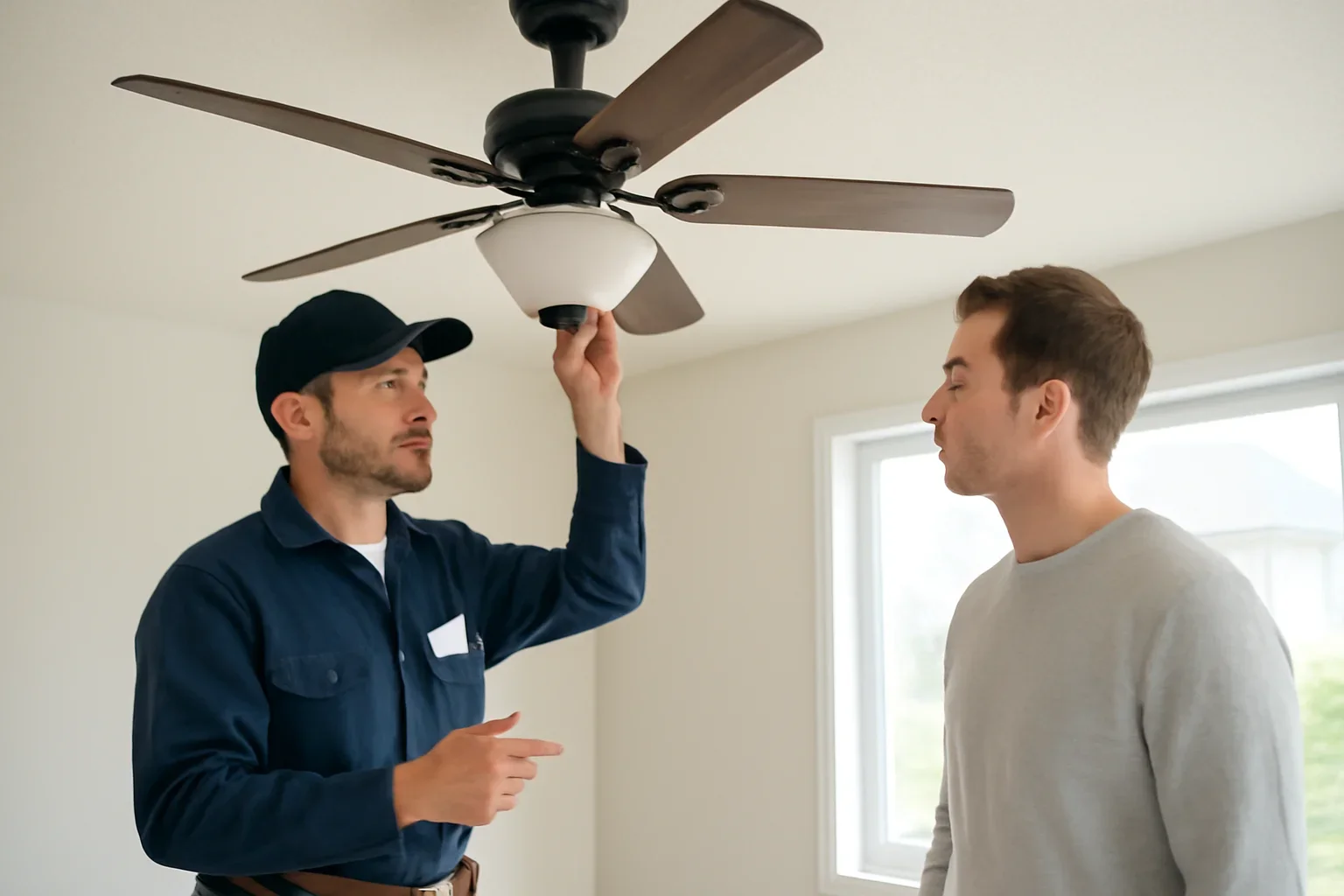
Yes. A licensed electrician can replace an existing fan, confirm whether the ceiling box is fan-rated, add or modify wiring, install wall controls, and plan a new fan location. The right scope depends on what is already behind the ceiling, the fan weight and control type, room access, ceiling height, and Saskatchewan permit requirements.
A fan is heavier and moves differently than a standard light fixture. A safe installation begins with the support, wiring, controls, and room conditions—not just the fan model.
The existing box and framing must be suitable for the fan’s weight and movement. A light-duty box may need to be replaced or reinforced before installation.
The electrician reviews the available conductors, switch layout, remote receiver, smart controls, light kit, and whether separate fan-and-light control is practical.
Ceiling height, slope, attic access, finished surfaces, furniture clearance, blade span, and placement all affect the installation plan and final comfort.

A newer home in Harbour Landing may have accessible modern wiring, while an older property in Cathedral, Lakeview, or Rosemont may require more investigation before a fan can safely replace an existing light.
Regina planning tip: Send a photo of the current fixture, switch location, ceiling height, and the fan model when requesting service. These details help identify whether the job is a straightforward replacement or may need new support, wiring, or access planning.
These are common starting points, not fixed packages. The existing box, wiring, access, fan specifications, and control setup determine the final work required.
Remove the old fan, inspect the support and wiring, assemble the new unit, connect the controls, balance the blades as needed, and test the fan and light functions.
Confirm whether the existing box and wiring are suitable. The box may need upgrading, and control options may be limited by the conductors already in place.
Plan the fan position, framing support, wiring route, switching, ceiling access, and finishing impact before opening the ceiling or running a new circuit connection.
Review ladder or lift access, ceiling angle, downrod length, canopy compatibility, blade clearance, and safe placement above furniture or work areas.
The goal is a fan that is securely supported, easy to control, properly positioned, and suited to the room—not simply attached to whatever box happens to be there.
Related support is available through our lighting installation services, switch and control installation, and residential electrical services.


The Technical Safety Authority of Saskatchewan identifies ceiling fan installation as an example of electrical work that can require a permit. When a licensed electrical contractor is hired, the contractor is responsible for obtaining the required electrical permit.
Review current requirements directly with TSASK electrical permits and inspections.
Good information at the start reduces surprises, especially when the existing ceiling box, wiring, or access cannot be confirmed from the room below.
Provide the property type, fan model, current fixture, ceiling height, switch setup, preferred timing, and photos of the ceiling and electrical box if visible.
The electrician checks whether the box is fan-rated, reviews the available wiring and controls, and identifies any access or permit considerations.
You receive an explanation of the practical options, including any required support upgrade, control change, new wiring, access work, or related electrical improvement.
The approved work is completed, the fan and light functions are tested, and important control, balance, clearance, and operating details are reviewed with you.
Ceiling fans vary widely in weight, controls, mounting hardware, blade span, and installation requirements. The existing property conditions matter just as much as the product in the box.
Recommendations are based on the room, ceiling, support, wiring, access, control preferences, and fan specifications.
Straightforward replacement work is separated from jobs that need a new box, wiring, switching, access, or permit planning.
Service is available for houses, condos, rentals, offices, retail spaces, restaurants, managed properties, and renovation projects.
Wall controls, pull chains, remote receivers, smart controls, and separate fan-and-light operation are reviewed around the available wiring.
Support, fasteners, canopy fit, blade clearance, downrod length, stability, and operating functions are checked before completion.
Ceiling fan installation is available across Regina and nearby communities, subject to scheduling, access, and project scope.
Electrician Regina works with homeowners, landlords, property managers, businesses, and contractors throughout the city.
Service requests commonly come from Harbour Landing, Albert Park, Whitmore Park, Lakeview, Cathedral, Rosemont, Wascana View, Greens on Gardiner, Uplands, Northwest Regina, White City, Emerald Park, and Pilot Butte.
Review the full electrical service area, explore the complete electrical service directory, or request service for your property.
Answers about fan-rated boxes, existing light locations, controls, permits, high ceilings, rentals, and quote preparation.
Hiring a licensed electrician is the practical choice when the work involves permanent wiring, replacing the ceiling box, adding support, changing switches, installing a new fan location, or confirming permit requirements. The electrician can assess whether the existing wiring and box are suitable before the fan is mounted.
Sometimes. The existing location may have suitable wiring, but the ceiling box still needs to be checked because a standard light box may not be rated for the fan’s weight and movement. Control options also depend on the conductors and switching already in place.
A fan-rated box should be identified for fan support and securely attached to framing or an approved brace. Visual appearance alone is not always enough, especially in older homes or where the box is hidden by the current fixture. An electrician can inspect the mounting before installation.
Separate wall control may be possible when the wiring supports it. Where only one switched conductor is available, options may include a compatible remote receiver, smart control, or new wiring. The fan model and existing switch box both need to be reviewed.
Yes, depending on access and the selected fan. The installation may require a compatible slope adapter, longer downrod, appropriate support, safe ladder or lift access, and enough blade clearance from the ceiling, walls, furniture, and occupied areas.
TSASK lists ceiling fan installation as an example of work that can require an electrical permit. The exact requirement depends on the work being completed. When a licensed electrical contractor is hired, the contractor is responsible for obtaining the required permit. Current requirements should be confirmed before work begins.
Yes, with the required owner, condominium, or property-management approval. Access rules, quiet hours, ceiling construction, common-property restrictions, and permit responsibilities should be confirmed before the appointment. Rental properties are not eligible for a homeowner electrical wiring permit.
Cost depends on whether the fan replaces an existing unit, whether the box is fan-rated, the wiring and controls available, ceiling height, attic or ceiling access, fan assembly, downrod requirements, permit needs, and whether new wiring or finishing access is required. Photos and the fan model help with the initial review.
Share the property type, current fixture, ceiling height, fan model, preferred controls, and photos when available. Electrician Regina can review the request and explain whether the next step is a straightforward replacement, an on-site assessment, or a more involved wiring and support upgrade.