Aluminum branch-wiring assessment
Identify accessible aluminum branch conductors, review panels, devices, junction boxes and visible alterations, and document the limits of concealed areas.

Get a focused review when aluminum branch-circuit wiring affects a home purchase, insurance question, renovation, overheated device or broader electrical upgrade. The useful scope depends on the conductor type, accessible connection condition, devices and junction boxes, past repairs, connected loads, panel arrangement and how much of the home must be included.

No. Older solid aluminum branch-circuit wiring serving lights, receptacles and switches is a different situation from modern, properly installed larger aluminum conductors commonly used for services, feeders and some equipment circuits. An assessment should identify the conductor type and locations before recommending connection remediation, circuit replacement or a broader rewire.
A hot receptacle, insurer questionnaire and whole-home renovation are not the same project. Defining the decision first helps establish which circuits, terminations and documents need to be included.
Identify accessible aluminum branch conductors, review panels, devices, junction boxes and visible alterations, and document the limits of concealed areas.
Investigate warm devices, discolouration, flickering, intermittent circuits, burning odours or repeated faults before replacing only the visible outlet or switch.
Confirm the exact questions, deadline and documentation required. An electrician can report electrical findings, while the buyer, lender or insurer makes its own acceptance decision.
Plan a consistent method for every affected connection included in the project—not only selected receptacles—using products, enclosures and installation methods accepted for the application.
Replace selected kitchen, bathroom, laundry, office, heating or equipment circuits when access and the remaining system support a clearly documented phased approach.
Develop a broader replacement plan when widespread connection coverage, renovation access, electrical demand or insurer requirements make piecemeal work impractical.

Reliable repair planning begins with evidence. Cable markings, conductor appearance, panel terminations and accessible devices can help distinguish older aluminum branch wiring from copper, copper-clad aluminum and larger modern aluminum feeders.
Before the appointment: share the Regina address, approximate construction date, panel photos, cable markings when visible, insurer or buyer questions, known repairs, affected rooms, symptoms, renovation plans and any permit or invoice records.
Mature Regina homes often contain original circuits, later basement work, renovated kitchens, replacement panels and partial device changes. A newer service or panel does not prove that every branch circuit and connection throughout the home was replaced.
Properties with finished basements, remodelled kitchens and added equipment may combine original branch circuits with several generations of upgrades.
Additions, basement development and changing appliance loads can make circuit mapping and connection coverage as important as the conductor material itself.
Larger homes may have more than one panel, finished additions or older renovation work that divides the electrical history into several distinct scopes.
Rental turnover, basement alterations and device replacement can make it difficult to know whether a previous repair covered every affected connection.
Modern appliances, portable heaters, air-conditioning and home offices can place different demands on circuits than the home had when its original branch wiring was installed.
Accessible devices may not reveal every splice, fixture connection or permanently wired appliance termination hidden elsewhere on the circuit.
The goal is to avoid both extremes: dismissing the concern because the system still operates, or promising a complete repair without identifying all connections and access limitations.
Clarify whether the project supports safety troubleshooting, insurance, a purchase, renovation planning, targeted repair or full replacement.
Review cable markings, panels, accessible conductors, devices, fixtures, equipment and records to map the apparent aluminum branch-circuit scope.
Document observed damage, prior repairs, inaccessible areas, enclosure constraints and connections that need further access or tracing.
Compare accepted connection remediation, selected circuit replacement, whole-home rewiring, panel work, permits and finishing coordination.
Connection resistance can create heat under load. A circuit may still appear to work while a termination is deteriorating, and not every failing connection gives an obvious early warning.
Stop using the affected circuit when there is smoke, active sparking, severe heat, melting, visible charring or a burning smell. Keep people away, call 639-710-0400 and contact emergency services when there is an immediate fire or life-safety risk.
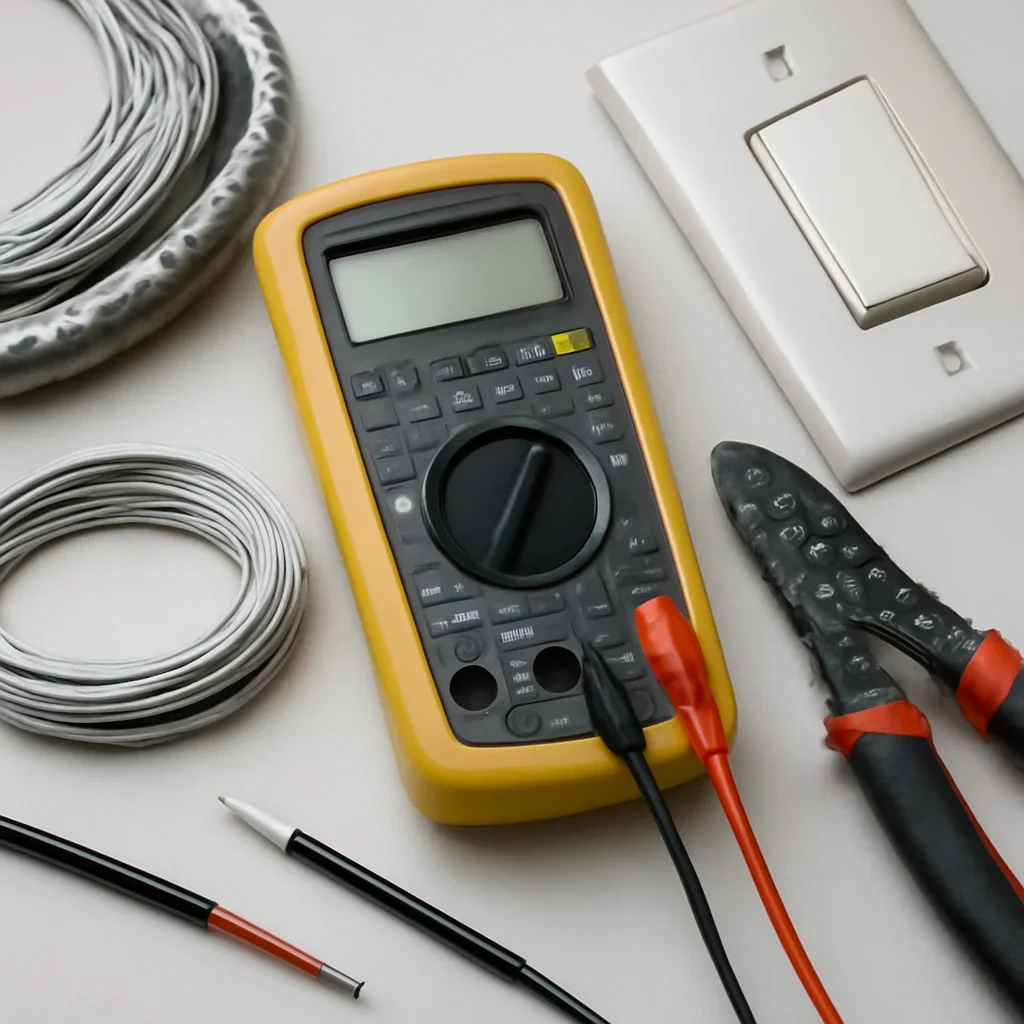

Branch circuits can terminate at receptacles, switches, dimmers, lighting fixtures, junction boxes, panels and permanently connected equipment. A remediation plan should define which connections are included, the locally accepted method, enclosure space, workmanship, testing and documentation.
When the project also affects breaker space, service condition or future electrical loads, review electrical panel upgrades in Regina .
Aluminum remains a legitimate conductor material in many modern electrical applications when the wire, equipment terminals, preparation and installation are suitable. The commonly discussed residential concern is older solid aluminum branch wiring and its numerous small connection points.
These circuits can contain many terminations throughout the home, including hidden junctions and fixture or appliance connections.
Larger modern aluminum conductors may be appropriate when used with compatible equipment, listed terminations and correct installation practices.
Copper-clad aluminum is not identical to bare aluminum branch wire. Cable markings and conductor identification should be reviewed before applying a repair recommendation.
TSASK administers electrical permits, inspections and contractor licensing in Saskatchewan. A private condition assessment is different from modifying branch wiring. Confirm the licensed contractor, permit holder, repair method, inspection stages and exact connections or circuits included before construction begins.
Record the apparent conductor type, accessible findings, prior repairs, affected areas and locations that remain concealed.
State whether the work covers every affected termination, selected circuits or full branch-circuit replacement and how deficiencies will be handled.
Clear records can help future owners, electricians, insurers and renovators understand the completed method and what aluminum wiring remains.
Browse the complete Electrician Regina service directory when aluminum wiring overlaps with troubleshooting, outlets, lighting, panel work or renovation wiring.
Repair decisions often overlap with damaged devices, modern equipment, surge protection and broader renovation work. Reviewing the connected projects together can avoid reopening finished areas.
Coordinate aluminum-wiring work with renovations, lighting, kitchens, basements, garages and other home electrical upgrades.
Investigate warm, damaged or unreliable devices while confirming conductor compatibility and the full connection-remediation scope.
Review panel, grounding and property-wide protection when home offices and modern electronics are part of an older electrical system.
Requests can be reviewed for owner-occupied homes, rental properties, purchases, sales and renovation projects across Regina, White City, Emerald Park, Pilot Butte and nearby areas.
Share the full address, approximate construction date, reason for the review and whether a written insurer, buyer or renovation scope is required.
Review Electrician Regina service areas for neighbourhood and nearby-community coverage.
Direct answers about identification, warning signs, pigtailing, device changes, insurance, phased repairs, permits and inspection limitations.
Cable jackets visible in an unfinished basement, attic or garage may include aluminum markings, but identification should not rely on colour alone. Copper-clad aluminum, larger aluminum feeders and older solid aluminum branch wiring are different. Have an electrician review cable markings, conductors, panels and devices.
Aluminum remains suitable for many modern electrical applications when the conductor, equipment and installation are compatible. The common residential concern is older solid aluminum branch wiring and its many connection points. Condition, prior repairs, connected loads and connection coverage determine the useful next step.
Warning signs can include hot cover plates, flickering lights, intermittent circuits, burning-plastic odours, discolouration, crackling, sparking and failed outlets or switches. Some deteriorating connections may provide little warning, so suspected aluminum branch wiring should be assessed by a qualified electrician.
Replacing selected outlets does not address switches, dimmers, fixtures, junction boxes, panel connections and permanently wired equipment elsewhere on the affected circuits. A complete repair plan must define every connection included and the accepted method used at each location.
Pigtailing joins a short copper conductor to the aluminum branch conductor so a compatible copper connection can be made to the device. The connector, conductor preparation, enclosure space, installation method and coverage of every affected termination matter. Do not assume a generic twist-on connector is an accepted permanent repair.
Insurance requirements are policy-specific. Ask the insurer which inspection, repair method, permit, photographs, invoices and completion documents it requires. An electrician can document findings and completed work but cannot guarantee the insurer’s underwriting decision.
Sometimes. A phased plan depends on circuit layout, access, connection coverage, panel condition, renovation timing and the ability to document what remains. Selected repairs should not be presented as a complete system remediation when other aluminum connections remain.
A condition assessment is different from modifying branch wiring. TSASK administers electrical permits and inspections in Saskatchewan. Confirm the licensed contractor, permit holder, accepted repair method, inspection stages and exact construction scope before work begins.
Not always. Finished walls, ceilings, built-ins and inaccessible junction boxes can conceal connections. The assessment should state what was opened or tested, which circuits were reviewed and what remains unknown or requires additional access.
Share the address, approximate age, purchase, insurance, repair or renovation purpose, deadline, panel photos, cable markings, symptoms, known repairs and the written information you need. The request can then be scoped as an assessment, connection-remediation plan, targeted rewire or whole-home replacement review.