Is there damage, corrosion, heat, or deterioration?
Discolouration, rust, missing covers, loose parts, unusual noise, odour, heat, or damaged fuse holders and breakers can indicate a condition that needs professional review.

A fuse box is not automatically unsafe simply because it is older, and a breaker panel is not automatically trouble-free because it looks newer. The important questions are condition, correct overcurrent protection, evidence of overheating or alterations, available capacity, and whether the system still fits the way your Regina property is used.

A modern breaker panel is usually easier to reset, label, expand, and integrate with current electrical equipment. However, replacement should be based on an assessment rather than age alone. A properly maintained fuse box with correct fuse sizes may continue to provide overcurrent protection, while a damaged, overloaded, modified, or undersized panel of either type requires attention. Upgrade planning should consider the service size, wiring condition, existing demand, renovation history, insurance requirements, and future loads.
An electrician should assess the system as a whole. The front cover does not reveal every connection, conductor, grounding issue, load, or alteration.
Discolouration, rust, missing covers, loose parts, unusual noise, odour, heat, or damaged fuse holders and breakers can indicate a condition that needs professional review.
Fuses and breakers must match the conductors and equipment they protect. Oversized fuses, improvised adapters, repeated replacement, or unknown circuit modifications can hide a larger problem.
Electric heating, air conditioning, basement development, workshops, ranges, dryers, hot tubs, EV charging, and additions can change the load placed on an older service.
A planned renovation may justify a panel change even when the existing panel is operating. The decision should account for circuit space, equipment requirements, service size, and the remaining wiring.
The comparison below describes common characteristics. Actual safety and suitability depend on the specific equipment, installation, service size, wiring, maintenance history, and loads at the property.
| Factor | Fuse box | Breaker panel |
|---|---|---|
| How protection operates | A fuse opens the circuit by melting when current exceeds its designed limit. The fuse must then be replaced with the correct type and rating. | A circuit breaker trips open and can normally be reset after the cause of the trip is understood and corrected. |
| Everyday convenience | Requires compatible replacement fuses to be available. Repeatedly replacing a fuse without finding the cause is not a repair. | Easier to reset, but repeated tripping still signals an overload, fault, equipment issue, or breaker problem that should be assessed. |
| Incorrect protection risk | Installing an oversized fuse or an improper adapter can defeat the intended protection for the circuit. | An incorrect breaker, incompatible breaker, oversized breaker, or unapproved modification can also leave the circuit improperly protected. |
| Adding circuits | Older fuse boxes often have limited spaces and may not suit modern circuit demand without additional approved equipment or replacement. | Modern panels may offer more circuit positions, but available spaces do not prove the electrical service has enough capacity. |
| Maintenance and parts | Condition and availability of compatible components become increasingly important as equipment ages. | Replacement components may be easier to source when the panel remains current and approved, but obsolete breaker panels can also present parts issues. |
| Upgrade decision | Consider replacement when there is damage, improper fuse sizing, limited capacity, unapproved changes, insurance concerns, or planned major loads. | Consider repair or replacement when there is damage, overheating, obsolete equipment, improper breakers, lack of capacity, or planned expansion. |

A useful assessment looks beyond whether the enclosure contains fuses or breakers. The electrician may need to review the service, grounding and bonding, branch circuits, panel condition, visible alterations, and the property’s current and planned loads.
Do not remove the panel cover or handle energized components. If the panel is smoking, sparking, making a loud arcing sound, producing a burning smell, or visibly overheating, move away from the area. Call emergency services for an active fire and use our emergency electrician Regina service for urgent electrical concerns.
A panel upgrade should solve a defined problem. Replacing the enclosure without addressing damaged wiring, insufficient service capacity, or a poor circuit layout may leave the larger issue unresolved.
Insurance underwriting varies by provider and property. Ask your insurer what documentation or upgrades it requires before assuming a fuse box will automatically be rejected—or automatically accepted.
Panel type is only part of the story. Established homes, basement developments, additions, detached garages, rental conversions, and business improvements can change the load and circuit layout over decades.
Properties in Cathedral, Lakeview, Heritage, North Central, Rosemont, and other established areas may have older services or several generations of renovation. The assessment should distinguish original work from later additions.
Finished basements can add receptacles, lighting, heating, laundry, kitchens, smoke alarms, and other loads. A full review may be needed when circuit labels do not match the present layout.
Garage heaters, welders, compressors, woodworking tools, lighting, and EV charging can place demands on a service that was originally designed for a much simpler property.
Air conditioning, electric ranges, dryers, hot tubs, vehicle charging, and home-office equipment can require load planning even when the existing panel still has one or two unused positions.
Panel work in rental homes, apartments, condos, and managed buildings has different ownership and permit considerations from limited work in an eligible owner-occupied single-family home.
Offices, restaurants, shops, warehouses, and tenant spaces may use different voltages, three-phase equipment, larger services, and more complex distribution. A residential-style comparison is not enough.
Saskatchewan requires an electrical permit for electrical installation work. When a licensed electrical contractor is hired, the contractor is responsible for obtaining the applicable contractor permit. Work involving an electrical service has additional homeowner-permit restrictions.
A panel replacement may involve more than transferring circuits into a new enclosure. The project can include the main disconnect, grounding and bonding, meter or service equipment, conductor condition, circuit identification, utility coordination, energization requirements, and corrections required once the existing installation is exposed.
Explore electrical panel upgrades in Regina, schedule an electrical inspection, or review whole-property surge protection as part of a broader system plan.
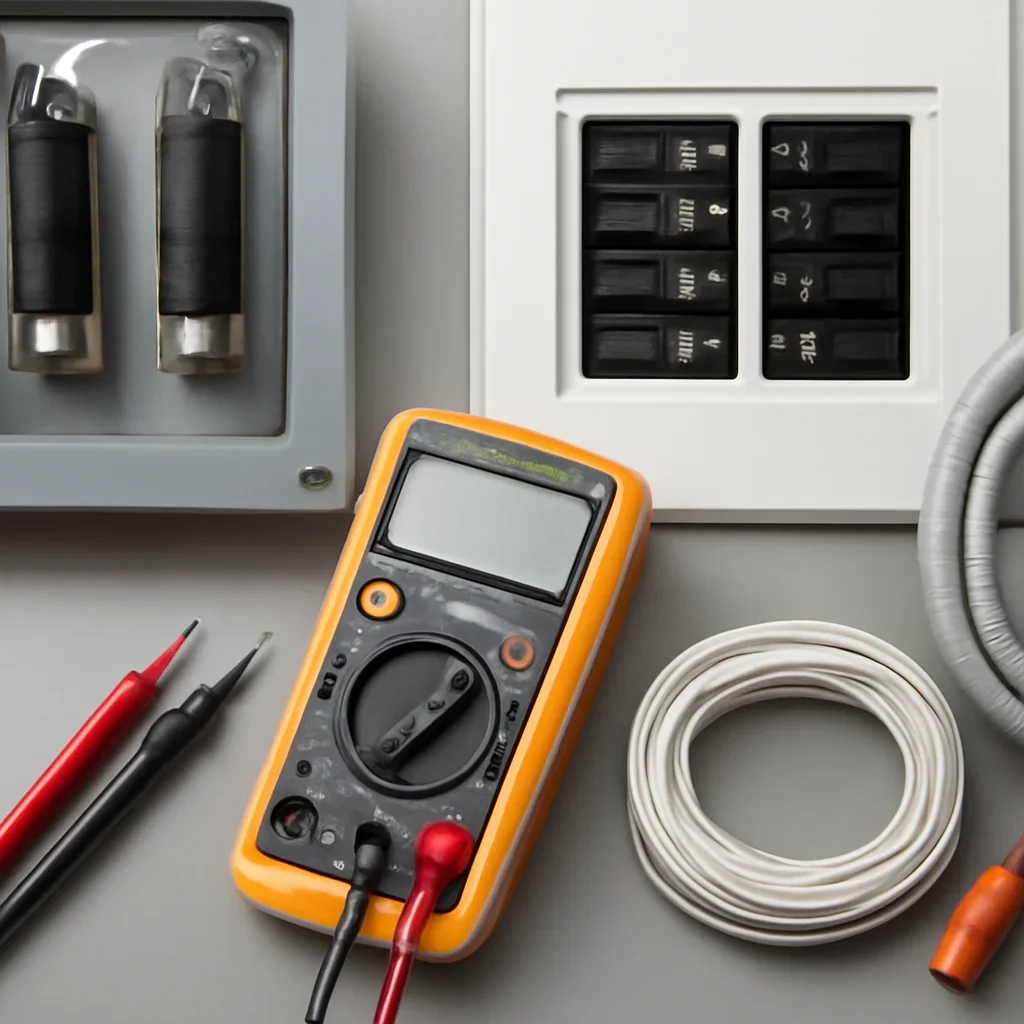
The goal is not to sell a larger panel by default. It is to understand the existing system, identify concerns, and match the recommendation to the property’s current condition and future use.
Explain whether the concern is insurance, a renovation, recurring fuse or breaker operation, an inspection finding, a new electrical load, or a property purchase.
Review the panel, service, visible wiring, circuit protection, condition, labels, available spaces, grounding, and signs of previous alteration.
Consider current loads, planned equipment, circuit needs, service capacity, repair feasibility, component availability, and the permit pathway.
Carry out the approved scope, test the affected installation, update circuit identification, and retain relevant permit and project records.
Photos and project information can help identify whether you need an inspection, a repair, a panel replacement, or a larger service-capacity conversation. Never remove the panel cover or touch electrical components to take a photo.
Include the property address, property type, reason for the review, and planned electrical additions. An on-site assessment may still be required before a final recommendation or quote can be prepared.
Panel inspections, repairs, service planning, and upgrade projects are available for homes, rental properties, businesses, garages, and managed buildings throughout the service area.
Review all Regina electrical service areas or explore the complete electrical service directory.
Straight answers about safety, fuse sizing, insurance, service capacity, permits, repeated fuse operation, and panel-upgrade planning.
No. Age alone does not determine safety. The fuse box should be assessed for condition, correct fuse sizes, approved components, heat damage, corrosion, modifications, service capacity, grounding, and the condition of the connected wiring. An older fuse box may be serviceable, while a newer-looking panel can still have defects or improper alterations.
Repeated fuse operation can indicate an overloaded circuit, damaged wiring, faulty equipment, a loose connection, or another electrical fault. Replace a fuse only with the correct approved type and rating. Do not install a larger fuse to stop it from opening; the underlying cause should be diagnosed.
Sometimes a panel replacement can retain the existing service rating, but the decision depends on the service equipment, conductor condition, grounding and bonding, available capacity, property loads, and applicable requirements. A panel change and a service-capacity upgrade are related but not always identical projects.
Insurance requirements vary by company, property, panel condition, service size, wiring type, and underwriting policy. Some insurers may request an electrical assessment, documentation, repairs, or replacement. Confirm the exact requirement with your insurer before approving work.
Not automatically. The electrician should review the existing service, calculated demand, charger or hot-tub requirements, other large loads, and available distribution options. The result may be an approved new circuit, load-management equipment, a panel change, or a service upgrade.
Electrical installation work requires a Saskatchewan electrical permit. When an electrical contractor is hired, the contractor is responsible for the applicable contractor permit. Service work has additional restrictions under the homeowner-permit pathway.
Cost depends on whether the project is a panel change or service upgrade, the service rating, meter and service equipment, grounding and bonding, circuit count, conductor condition, utility coordination, access, permit scope, and corrections uncovered during the work. An assessment is needed for a dependable quote.
Do not remove the cover or touch the equipment. Stop using nearby electrical equipment when it is safe to do so and move away from the area. Call emergency services for smoke or an active fire. Otherwise, contact an electrician promptly and explain the heat, odour, noise, sparking, or loss of power you observed.
Share the property type, panel photos, reason for the review, recurring symptoms, and any planned renovation or major electrical load. Electrician Regina can review the request and identify whether an inspection, repair, panel replacement, or service-upgrade assessment is the appropriate next step.