Home EV charger installation
Installation planning for compatible Level 2 chargers, dedicated circuits, wall mounting, setup requirements, and practical everyday charging access.

Add convenient home charging without guessing at circuit size or panel capacity. Electrician Regina reviews the charger specifications, vehicle charging limits, existing electrical service, cable route, garage or driveway location, and future household demand before recommending the installation.

Most faster home-charging projects use Level 2 equipment supplied by a dedicated 240-volt circuit. The correct circuit, conductor, breaker, charger setting, and installation method depend on the vehicle, the selected charger, available panel capacity, service size, cable distance, and the other electrical loads in the home.

White City continues to grow and includes new homes, renovated properties, finished basements, attached and detached garages, outdoor parking, and homes adding equipment that can increase electrical demand.
The useful question is not simply whether a charger can be mounted on a wall. The project should account for where the vehicle parks, how the charging cable reaches it, whether the garage is finished, how far the panel is from the charger, and what other major loads operate at the same time.
Review the White City electrical service area for local coverage information.
A useful plan connects the vehicle, charger, home electrical system, parking location, and future needs instead of treating the charger as an isolated device.
Installation planning for compatible Level 2 chargers, dedicated circuits, wall mounting, setup requirements, and practical everyday charging access.
Assessment of service size, panel condition, breaker space, existing demand, and whether an upgrade or another capacity solution should be considered.
Circuit planning based on charger output, manufacturer requirements, conductor route, overcurrent protection, installation method, and distance.
Early-stage planning for business parking, multiple chargers, shared electrical capacity, operating schedules, user access, and future expansion.
A closer look at panels, circuits, previous alterations, garage wiring, and visible concerns before adding a continuous vehicle-charging load.
Coordinate conduit, cable routing, panel work, wall finishing, garage changes, or future-ready wiring while other renovation work is already underway.
Charging speed should be matched to daily travel, overnight parking time, vehicle limits, available capacity, installation cost, and future plans.
A standard 120-volt charging cord may suit low daily mileage or plug-in hybrids, but charging is slower and the existing circuit still needs to be suitable for sustained use.
A dedicated 240-volt circuit provides faster home charging. Actual charging speed is limited by the vehicle, charger settings, circuit size, and onboard charging capability.
A hardwired charger can reduce plug-and-receptacle connections and may suit a permanent garage or outdoor location when supported by the product instructions.
A plug-in charger can offer equipment flexibility, but the receptacle, enclosure, circuit, mounting, and cord arrangement must be appropriate for the charger and location.
Where service capacity is limited, compatible load-management equipment may help control charging demand. Suitability depends on the home and equipment.
Consider a second EV, a larger vehicle, solar, a hot tub, electric heating, a renovation, or other loads before finalizing the circuit and cable route.
The charger price is only one part of the project. Labour and materials depend heavily on the panel, cable route, installation surface, distance, charger output, parking position, and whether walls or exterior areas must be crossed.
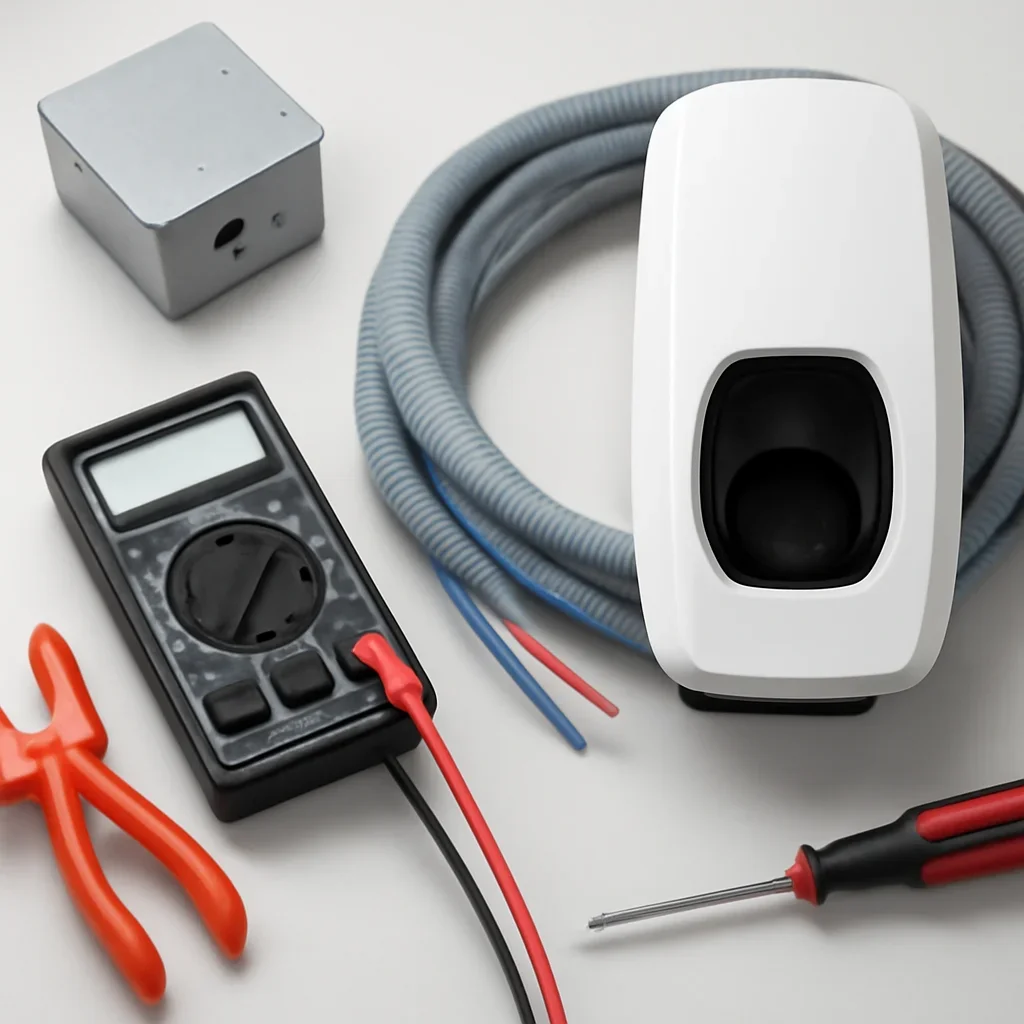
The process starts with the charging need and property details, then moves through electrical assessment, scope approval, installation, and testing.
Provide the vehicle, charger model, preferred charging speed, parking position, property address, and photos of the proposed installation area.
The panel, service, existing demand, breaker space, cable path, mounting surface, garage layout, and outdoor exposure are reviewed.
Circuit size, installation method, charger setting, required electrical work, permit or inspection needs, and any capacity solution are explained.
Approved work is completed, the charger is set up as applicable, and the circuit and charging operation are checked before closeout.

Good installation work is more than mounting the unit. It should connect the equipment instructions, circuit design, property conditions, permit path, and actual charging use into one clear scope.
White City maintains municipal permit information for new homes, renovations, basement development, accessory buildings, commercial projects, and other property work. The electrical permit and inspection path should be confirmed for the final EV charging scope before installation begins.
Clear answers about charging speed, panel upgrades, hardwired equipment, outdoor installation, permits, and preparing an accurate quote.
It depends on daily driving, the vehicle, overnight parking time, and how quickly the battery needs to recover. Level 1 may be enough for lighter use, while Level 2 is commonly chosen when faster, more predictable overnight charging is needed.
Not every installation requires an upgrade. The decision depends on service size, panel condition, breaker space, existing demand, charger output, and whether a suitable load-management option is available. The system should be assessed before the charger circuit is selected.
Neither option is universally better. Hardwired equipment may suit a permanent indoor or outdoor installation. Plug-in equipment may offer more flexibility, but it requires a suitable receptacle, enclosure, circuit, and cord arrangement. The charger instructions and site conditions should guide the choice.
Yes, when the charger and installation method are approved for the exposure. Placement should consider weather, snow, impact risk, cable reach, drainage, mounting, vehicle position, and whether the connector can be used without creating a trip or snow-clearing obstruction.
A new dedicated charging circuit is permanent electrical work, so applicable electrical permit and inspection requirements should be confirmed for the project. Related municipal approval may also need review when the work is coordinated with a renovation, garage, commercial, or other property project.
Send the White City address, vehicle details, charger model, preferred location, panel photos, approximate panel-to-charger distance, parking position, and information about major electrical loads. Photos often help determine whether an on-site assessment is needed.
Share the vehicle, charger model, panel photos, parking location, preferred mounting point, and approximate cable distance. Electrician Regina can review the information and identify the most useful next step for the property.