Panel and load assessment
Review service size, panel condition, breaker space, major electrical loads, and the charging output the home can reasonably support.

Add reliable overnight charging where you actually park. Electrician Regina reviews the panel, available electrical capacity, breaker size, cable route, garage layout, winter exposure, permit requirements, and Wall Connector setup before recommending the installation approach.
For a faster quote: send a photo of the electrical panel, the proposed charging location, the route between them, and the exact Wall Connector model you purchased or plan to purchase.
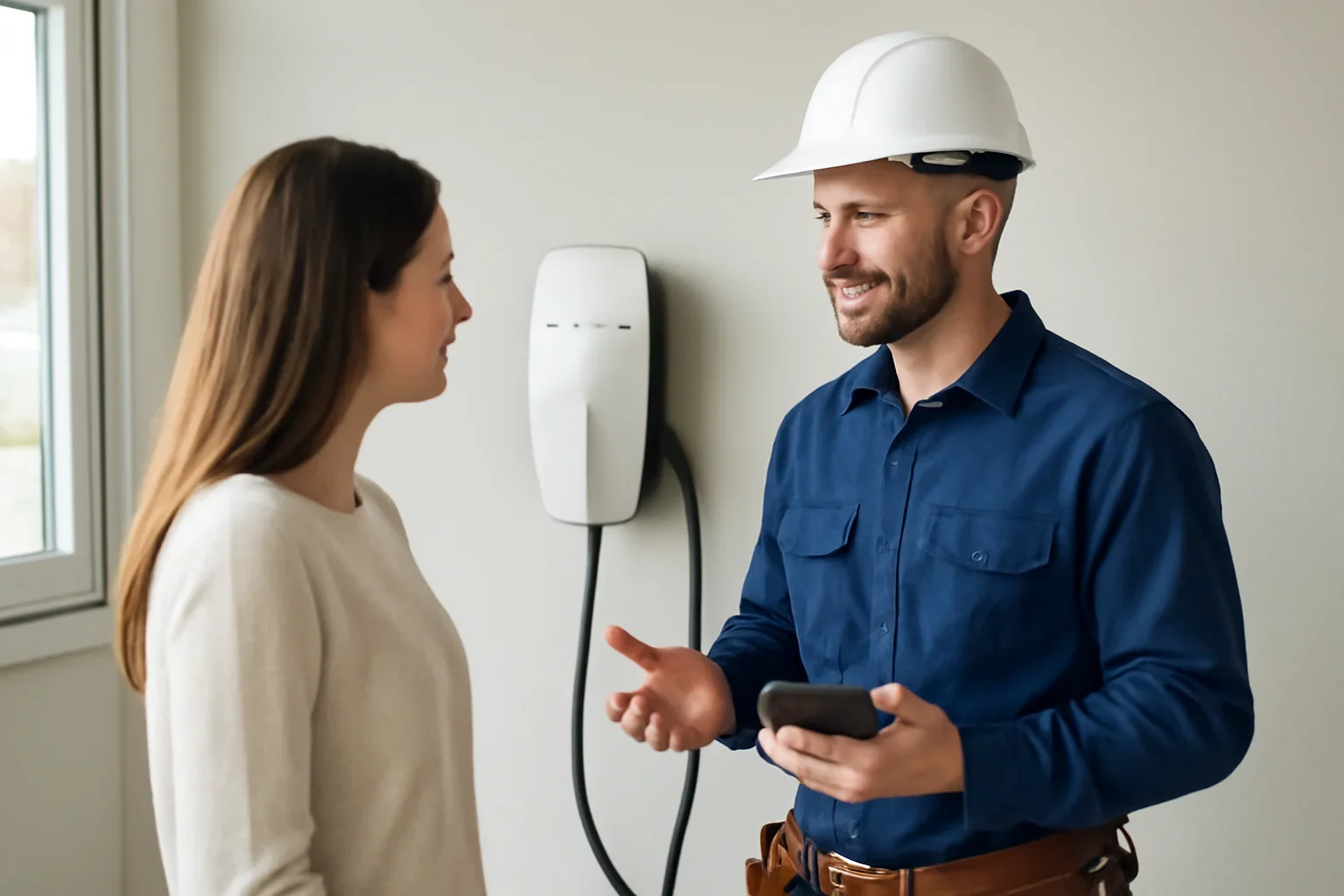
A Tesla Wall Connector normally needs a dedicated 240-volt circuit sized for the selected charging output, a suitable breaker, an approved wiring method, secure indoor or outdoor mounting, electrical permitting, inspection, and final commissioning. In Saskatchewan, EV charger work is not eligible for a homeowner electrical permit: it must be completed by a licensed Saskatchewan electrical contractor under a contractor permit.
The installation should match the vehicle, the electrical service, the parking arrangement, and how the property may use electricity in the future. The fastest setting is not automatically the best or necessary setting for every Regina home.
Review service size, panel condition, breaker space, major electrical loads, and the charging output the home can reasonably support.
Position the Wall Connector so the cable reaches the vehicle without crossing walkways, dragging through snow, or sitting where it can be struck.
Install the breaker, conductors, protection, supports, fittings, and wiring method required for the approved route and charging amperage.
Plan exposed runs, underground routing, trenching, garage feeds, or subpanel work where the parking area is separated from the main electrical panel.
Consider a lower charging setting, approved power-management features, a subpanel, or a panel upgrade when available capacity is limited.
Configure breaker size and output, connect the Wall Connector to Wi-Fi, register it, test operation, and review Tesla app controls with the owner.
For other electric vehicles or charging hardware, visit EV charger installation in Regina. If capacity is the main concern, review electrical panel upgrades.
Regina installations range from short runs inside attached garages to longer routes serving detached garages, outdoor stalls, driveways, and nearby acreage properties. Local planning should account for cold weather, snow accumulation, panel location, finished walls, Wi-Fi reach, and where the vehicle is parked every night.
A nearby panel can simplify the route, but breaker space, available load, finished walls, garage fire separations, and cable placement still need review.
Older Regina properties may need underground wiring, an exterior route, a garage subpanel review, or trench planning before the charger can be installed.
Mounting height, snow clearing, moisture exposure, physical protection, cable storage, Wi-Fi signal, and the usual parking position all matter.
Do not install an EV charger from an improvised extension, dryer-circuit splitter, or unverified existing receptacle. Continuous vehicle charging places a sustained load on the circuit. Have the circuit and equipment assessed before relying on it for regular charging.
Tesla lists Wall Connector output up to 48 amps on a 60-amp circuit, but it can also operate at lower settings. Vehicle capability, daily driving, overnight charging time, panel capacity, and future plans should guide the final choice.
| Circuit breaker | Maximum Wall Connector output | Approximate power at 240 V | When it may fit |
|---|---|---|---|
| 60 A | 48 A | 11.5 kW | Maximum supported Wall Connector output where the vehicle and electrical service can use it. |
| 50 A | 40 A | 9.6 kW | Strong overnight charging where a 60-amp circuit is unnecessary or unavailable. |
| 40 A | 32 A | 7.7 kW | A practical setting for many daily-driving needs and vehicles limited to 32 amps. |
| 30 A | 24 A | 5.7 kW | Useful when load capacity is limited but overnight charging time is available. |
| 20 A | 16 A | 3.8 kW | A lower-output option where driving needs and available capacity support it. |
Charging speed varies by Tesla model, battery condition, temperature, and the vehicle's onboard charger. The circuit should be selected from the actual load calculation and manufacturer requirements, not from charger marketing alone.
The charger itself is only one part of the project. The largest cost differences usually come from electrical capacity, route length, finished surfaces, detached buildings, outdoor work, trenching, panel changes, and permit-related scope.
| Quote factor | Why it changes the work |
|---|---|
| Panel capacity and breaker space | A full or heavily loaded panel may need load management, a subpanel, or an upgrade. |
| Distance to the parking location | Longer runs require more conductor, labour, supports, fittings, and voltage-drop planning. |
| Attached or detached garage | Detached buildings can add underground wiring, trenching, exterior work, or garage-panel changes. |
| Finished walls and ceilings | Concealed routes, patching limits, fire separations, and accessibility affect the installation method. |
| Indoor or outdoor mounting | Outdoor installations may require different routing, fittings, protection, and mounting details. |
| Permit and inspection scope | The electrical contractor permit, inspection, and related corrections must be included in planning. |
A full 48-amp output may not be necessary for the driver's routine, and a home with limited spare capacity may still have workable options. The right solution starts with the existing service, panel, heating and appliance loads, charger setting, and future electrical plans.
An electrical inspection can help when the panel condition or previous alterations are uncertain. For home-wide support, visit the residential electrician page.

Good preparation helps avoid the most common surprises: an unsuitable route, insufficient panel capacity, missing equipment details, poor Wi-Fi coverage, or a charging location that is awkward once the vehicle is parked.
Provide the address, vehicle, charger model, panel photo, parking location, approximate distance, garage type, and preferred timing.
Review panel capacity, breaker space, major loads, wall construction, cable route, mounting point, exposure, and Wi-Fi availability.
Define the charging output, circuit, materials, route, related upgrades, contractor permit, inspection steps, exclusions, and project price.
Complete the approved work, configure the Wall Connector, register it, connect Wi-Fi, test charging, and explain the owner controls.

TSASK states that EV chargers are not eligible for a homeowner electrical wiring permit. The installation must be performed by a licensed Saskatchewan electrical contractor under a contractor permit. The owner can legally request a copy of the permit for work performed on the property.
Review current Wall Connector specifications and setup information through Tesla Support Canada. Saskatchewan permit guidance is available from TSASK electrical permits and inspections.
Installation requests can be reviewed for attached garages, detached garages, outdoor parking areas, townhomes, acreages, workplaces, and managed properties throughout Regina and nearby communities.
Visit the electrical service areas page for broader coverage information, or review the complete electrical service directory.
Direct answers about permits, panel capacity, charging output, outdoor mounting, detached garages, commissioning, multiple vehicles, and installation quotes.
Yes. TSASK requires electrical installation work to be completed under an electrical permit. EV charger installations are specifically excluded from homeowner permits and must be completed by a licensed Saskatchewan electrical contractor under a contractor permit.
No. A 60-amp circuit allows up to 48 amps of Wall Connector output, but the unit can be configured for lower breaker sizes and lower output. The correct setting depends on the vehicle, panel capacity, daily driving, and desired charging time.
Not necessarily. The electrician should review service size, current loads, breaker space, panel condition, and the desired charging output. A lower setting, power management, or a subpanel may be suitable in some homes; other properties may need a panel or service upgrade.
Tesla Wall Connector is designed for indoor or outdoor mounting. A Regina outdoor installation still needs a suitable mounting location, approved wiring method, physical protection, snow and moisture planning, convenient cable storage, and enough Wi-Fi signal for connected features where possible.
Yes, depending on the existing electrical supply and route. The assessment may involve the garage panel, feeder capacity, underground wiring, trenching, exterior routing, distance from the house, and the charging output required.
The charger can deliver power after proper installation and commissioning, while Wi-Fi enables automatic firmware updates, app features, charging history, remote diagnostics, and other connected functions. Tesla currently specifies a password-protected 2.4 GHz Wi-Fi network for setup.
Tesla supports Group Power Management for compatible Wall Connectors. This can help two charging units share an available electrical limit. The property load, equipment compatibility, circuit design, parking arrangement, and future use should be reviewed before installation.
Send the service address, Tesla model, Wall Connector model, panel photo, main breaker rating, preferred charger location, approximate panel-to-charger distance, garage type, photos of the proposed route, and preferred timing. An on-site assessment may still be needed where the route or capacity is uncertain.
Share your address, Tesla model, Wall Connector model, panel photo, parking location, garage type, approximate cable route, and preferred installation date. The information can be reviewed to identify the likely circuit, site assessment, permit, and installation requirements.