How much charging is actually needed?
Daily distance, battery size, charging time available, and the vehicle’s onboard charging limit help determine a practical output.

Plan a home or commercial charging setup around the vehicle, daily driving, parking location, available panel capacity, cable route, outdoor exposure, and future needs. Electrician Regina reviews the complete installation before recommending charger output, circuit size, load management, or supporting electrical upgrades.

Confirm the vehicle’s charging capability, the distance driven between charges, how long it normally remains parked, the charger location, cable reach, electrical panel capacity, available breaker space, circuit route, outdoor conditions, and whether a future second EV is likely. These details determine whether a standard dedicated circuit, lower-output charging, load management, a subpanel, or a service upgrade is the practical solution.

Emerald Park is within the RM of Edenwold beside White City and east of Regina. Properties range from attached and detached residential garages to larger lots, shops, retail buildings, workplaces, and nearby rural sites.
That variety affects charging design. A charger beside an attached garage panel may require a very different route from one serving a detached garage, exterior parking stall, business fleet, or shop. Saskatchewan winter conditions also make charger placement, cable handling, snow clearance, enclosure suitability, and reliable overnight access worth planning carefully.
Review the main EV charger installation service, related panel capacity upgrades, or the Emerald Park electrical service area.
Charger brand matters, but placement, electrical capacity, real charging needs, and the path between the panel and parking area usually have a larger effect on the installation scope.
Daily distance, battery size, charging time available, and the vehicle’s onboard charging limit help determine a practical output.
Confirm the regular parking position, charge-port location, cable reach, trip hazards, snow storage, and whether the charger needs outdoor exposure protection.
Service capacity, major household or business loads, panel condition, breaker space, and proposed charger output should be reviewed together.
Finished walls, ceilings, trenching, detached structures, conduit, driveway crossings, and panel location affect routing and restoration work.
Future vehicles, two-car households, fleet growth, shared parking, and charger networking can change the best circuit and equipment strategy.
Homeowners may want simple scheduled charging, while workplaces and multi-user sites may need authentication, monitoring, billing, or load sharing.
A charger should replenish the energy the vehicle uses within the time it is normally parked. Oversizing can add cost and capacity pressure without providing a meaningful everyday benefit.
A lower charging rate may be suitable when daily driving is modest and the vehicle remains parked for a long overnight window. This can reduce circuit and capacity requirements.
A dedicated 240-volt charging circuit is commonly considered when faster, more predictable home or workplace charging is needed. Output should still match the vehicle, panel, and use pattern.
Approved load-management or load-sharing equipment can sometimes support charging without immediately increasing service capacity, especially when demand can be controlled.
The charger nameplate is only one part of the project. The existing service, panel, connected loads, circuit route, and intended charging output determine what the property can support.
Do not rely on an ordinary extension cord or improvised wiring. Charging is a sustained electrical load. Use equipment and a circuit installed for the intended charging method.
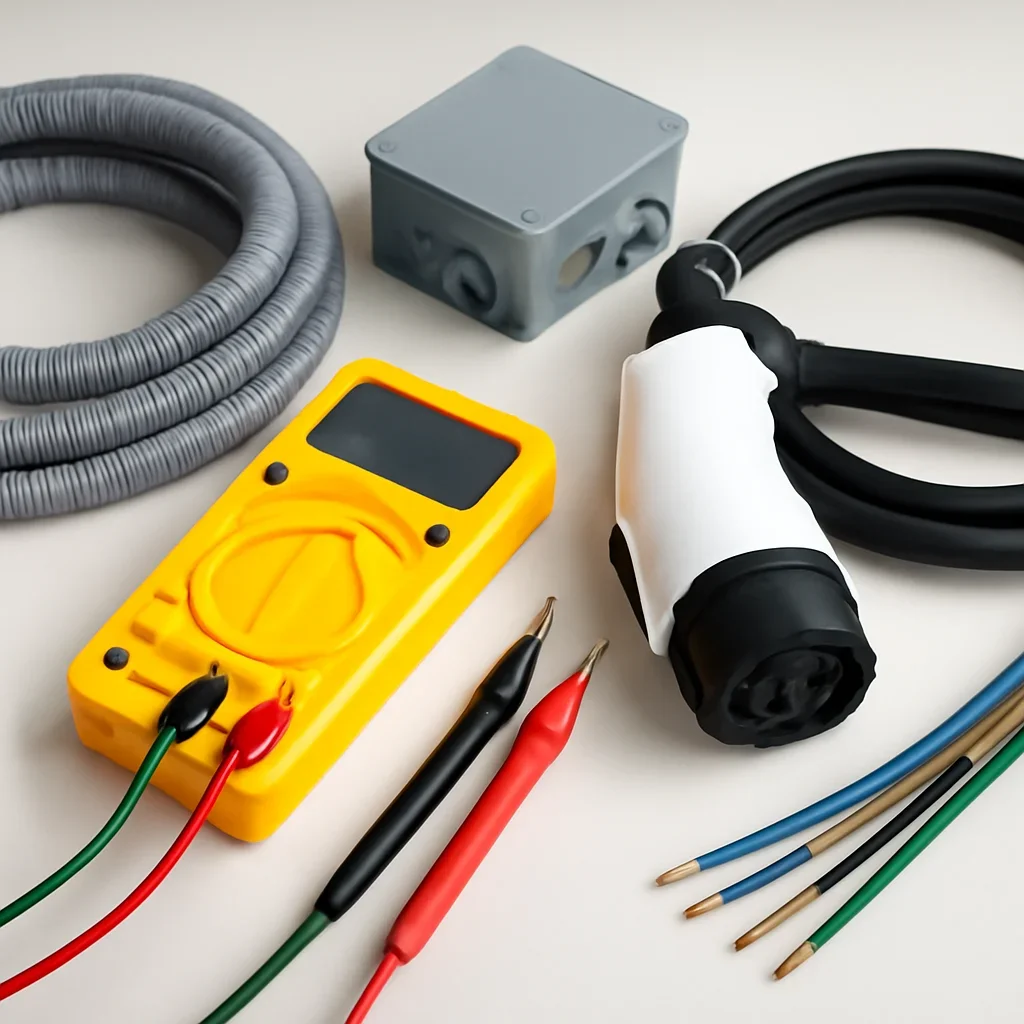
The same charger can create a very different project depending on who uses it, how long vehicles remain parked, and how the property’s electrical system is configured.
Plan around panel location, garage construction, parking position, cable reach, finished surfaces, exterior routing, and whether a detached garage needs a feeder or subpanel review. Explore residential electrical services.
Outdoor installations need appropriate equipment, secure mounting, cable management, snow and ice clearance, vehicle-impact protection where relevant, and a route that avoids everyday trip hazards.
Business charging may require user access, charging policy, parking controls, energy monitoring, networking, signage, multiple circuits, or shared power. Explore commercial electrical services.
Vehicle schedules, return-to-base time, service capacity, three-phase or single-phase supply, equipment placement, winter operation, and future fleet growth should be reviewed before chargers are purchased.
The project should be scoped before equipment is ordered so charger compatibility, circuit requirements, capacity, routing, and scheduling can be considered together.
Provide the Emerald Park address, vehicle model, charging equipment under consideration, parking location, daily driving, panel photos, and timing.
Assess the service, panel, existing loads, breaker space, charger location, circuit route, mounting surface, and outdoor conditions.
Agree on charger output, hardwired or receptacle connection, load management, circuit work, permits, inspection, access, and scheduling.
Complete the approved work, test the circuit and charger as appropriate, confirm cable reach, and review basic use and shutoff information.
In Saskatchewan, the Technical Safety Authority of Saskatchewan administers electrical permits, inspections, and electrical contractor licensing. The exact permit and inspection path depends on the installation.
A straightforward charger circuit and a project involving a service upgrade, detached building, commercial charging bank, or substantial distribution changes will not necessarily follow the same planning process.
Charger models can differ in maximum output, adjustable settings, connection method, outdoor rating, cable length, networking, load-management compatibility, and manufacturer requirements.
Confirming these details first can prevent purchasing equipment that does not fit the panel, parking layout, vehicle, or intended charging plan.
The charger itself is only one cost. Circuit distance, routing, capacity, trenching, panel work, and site conditions can have a larger effect on the installation.
For a useful first review, send photos of the electrical panel and labels, the proposed parking and charger location, the route between them, and the charger or vehicle specifications when available.
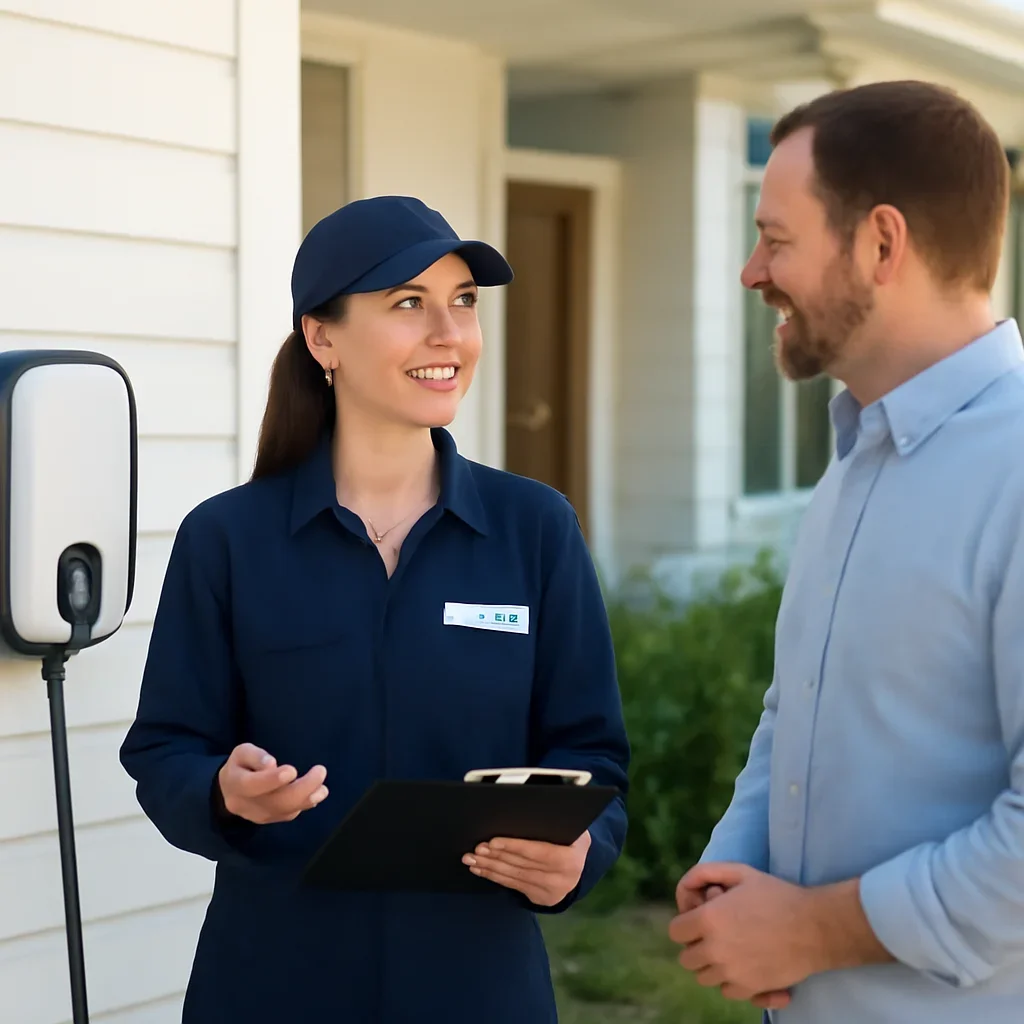
Include the exact address, normal parking position, whether the garage is attached or detached, and how the property is used. These details help define routing, access, capacity, and mounting requirements.
Properties near White City, Great Plains Road, Highway 1 access, commercial areas, larger residential lots, and nearby rural roads can present different circuit distances and site conditions. The installation should be planned around the actual parking and electrical layout rather than a generic charger package.
You can send the charging details or review the complete electrical service directory when the project also involves a garage, renovation, panel, generator, or other electrical work.
Clear answers about charger output, panel capacity, outdoor installation, load management, permits, winter use, and quote preparation.
Not every driver needs the same charging output. Consider daily distance, battery capacity, how long the vehicle is parked, and how quickly energy needs to be replaced. A lower-output solution may be sufficient for modest daily driving, while a dedicated Level 2 charger can provide faster and more predictable overnight charging.
No. The decision depends on the existing service, current major loads, charger output, panel condition, breaker space, and whether approved load management is suitable. Some properties can support charging without a service upgrade; others need panel, feeder, or service work.
Yes, when the charger and installation method are approved for the environment. Location planning should consider weather exposure, snow and ice, drainage, cable storage, mounting, vehicle impact, security, and safe access to the charge port.
Each method has advantages. A hardwired installation can reduce exposed connection points and may suit outdoor or higher-output applications. Receptacle-based charging can allow equipment replacement, but the receptacle, circuit, enclosure, and charger must be suitable for the intended continuous use and location.
Sometimes. The solution may use separate circuits, lower charging outputs, scheduled charging, dual-port equipment, or approved load sharing. Vehicle schedules, overnight dwell time, panel capacity, and future demand should be reviewed before selecting equipment.
The Technical Safety Authority of Saskatchewan administers electrical permits, inspections, and electrical contractor licensing in the province. Requirements depend on the charger installation and any related panel, feeder, service, or commercial electrical work.
Provide the Emerald Park address, vehicle model, charger model when known, daily driving estimate, parking location, photos of the electrical panel and labels, photos showing the route to the parking area, whether the garage is attached or detached, and any future second-vehicle plans.
Share the property address, vehicle and charger details, daily driving, parking location, panel photos, route photos, and whether you expect to add another EV. The information can then be reviewed to identify a practical charging output, circuit plan, and capacity solution.