
Updated July 2026
EV charger installation in Regina: a practical homeowner guide
Plan a home EV charger around the vehicle you drive, your normal daily distance, the electrical capacity available at the property, the parking location, Regina winter exposure, and the cable route between the panel and charger.

What does a Regina home need for EV charging?
Many drivers can use a standard 120-volt outlet for Level 1 charging, but Level 2 charging generally requires a dedicated 208- or 240-volt circuit. The right setup depends on daily driving, vehicle limits, charger output, panel and service capacity, circuit distance, parking access, and whether load management or an electrical upgrade is needed. A licensed Saskatchewan electrical contractor must perform EV charger work under the appropriate permit.
Why EV charger installation is property-specific in Regina
Two homes on the same street can need different circuits, cable routes, equipment, and electrical upgrades. The quote should be based on the actual panel, garage, parking arrangement, and charging goal—not a generic package.
Attached garages and newer electrical layouts
Homes in areas such as Greens on Gardiner and Harbour Landing may have relatively direct garage access, but an unused breaker position does not automatically prove that the service has enough capacity for the desired charger output. Review our electrician service in Greens on Gardiner for local coverage information.
Older panels, finished basements, and previous renovations
Properties in Cathedral, Lakeview, Heritage, Rosemont, and other established areas can involve older service equipment, limited panel space, finished wall routes, or additions completed at different times. These conditions may change labour, routing, and upgrade requirements.
Garage, driveway, trenching, and outdoor exposure
A detached garage or exterior parking position may require a longer route, approved underground or exterior wiring methods, coordination with existing landscaping, and charger placement that remains accessible around snow, ice, and regular vehicle use.
Level 1, Level 2, or a load-managed charger?
Faster is not always the best value. The practical target is enough overnight range for your driving pattern without oversizing the circuit or forcing an unnecessary electrical upgrade.
| Charging option | Typical electrical supply | Best suited to | Property planning |
|---|---|---|---|
| Level 1 | 120 V household outlet | Lower daily driving, plug-in hybrids, or backup charging | Confirm the receptacle and circuit are suitable for sustained charging use. |
| Level 2 | 208/240 V dedicated circuit | Regular overnight charging and higher daily mileage | Match charger output to the vehicle, circuit, panel capacity, and available service. |
| Load-managed Level 2 | Dedicated circuit with approved energy management | Homes where electrical demand changes throughout the day | May provide a practical alternative when full charger output is not continuously available. |
| Panel or service upgrade | Project-specific | Properties where calculated demand exceeds available capacity | Review the complete home load and future electrification plans before upgrading. |
Natural Resources Canada describes Level 1 charging as 120 V and Level 2 charging as 208/240 V. Actual charging speed varies by vehicle, battery, charger, temperature, and available electrical output. Compare the options in our Level 1 vs Level 2 EV charger guide.
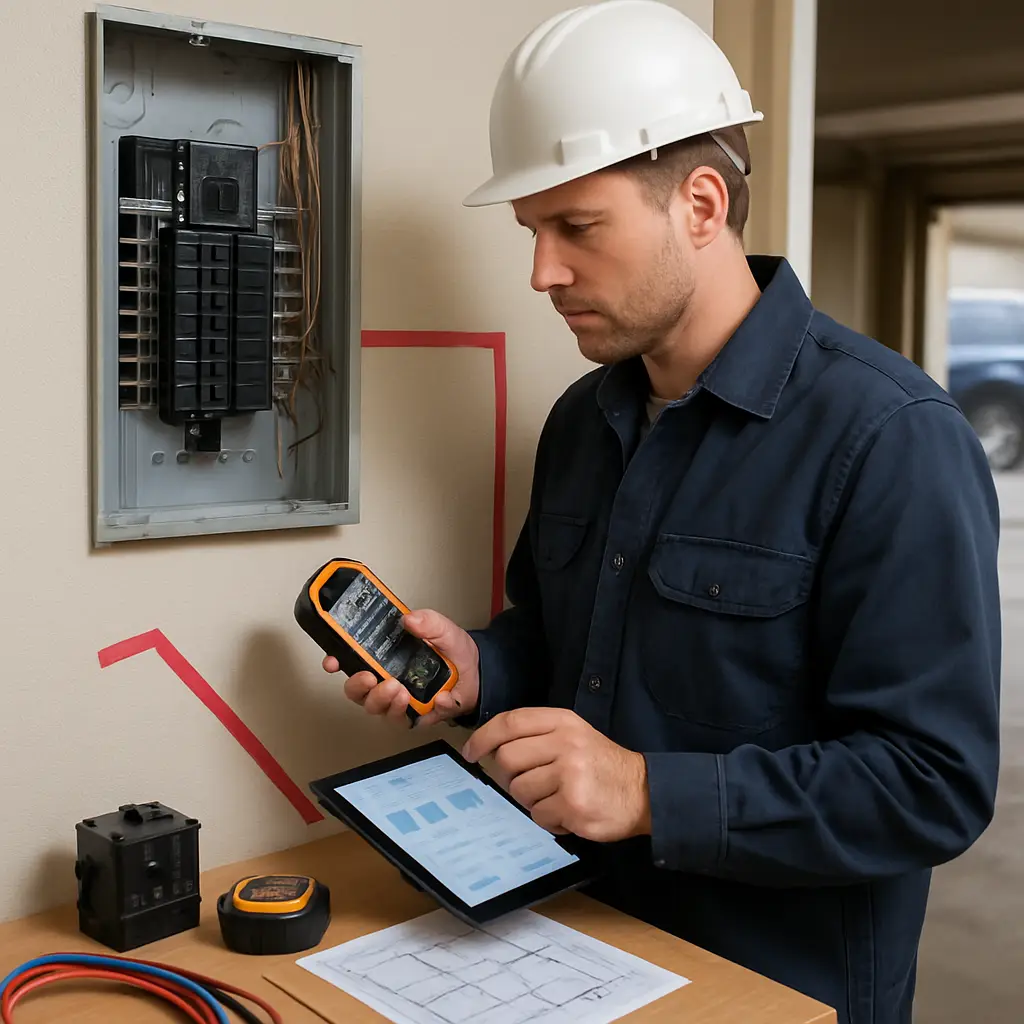
Six decisions that shape the EV charger installation
Charger selection should follow the property assessment—not the other way around. Confirming the following details first can prevent an incompatible purchase or an unexpectedly expensive cable route.
- Daily distance: How much range normally needs to be restored overnight?
- Vehicle limit: What AC charging rate can the vehicle accept?
- Equipment: Is the charger certified for Canadian use and suitable for the location?
- Electrical capacity: Can the existing service support the proposed continuous load?
- Parking position: Will the cable reach without crossing a walkway or creating a trip point?
- Future loads: Is a second EV, heat pump, hot tub, suite, or other major load planned?
Important: An empty breaker space is not the same as available electrical capacity. The service, panel rating, existing demand, charger output, and applicable calculation must be reviewed together.
Does an EV charger automatically require a panel upgrade?
No. Some properties have enough capacity for the requested charger, while others may need a lower-output circuit, approved load-management equipment, a panel change, or a service upgrade. The answer comes from the property assessment.
Use available capacity
Install a charger output that fits the existing service, panel, vehicle, and daily charging requirement when the calculated capacity supports it.
Apply load management
Approved energy-management equipment may reduce charger output when other large home loads are operating and restore it when capacity becomes available.
Upgrade when the property needs it
When demand, equipment condition, space, or future plans justify an upgrade, review the complete scope through our electrical panel upgrades in Regina information.
Plan the charger for cold weather and everyday access
Outdoor-rated equipment is only one part of a reliable exterior installation. The mounting position, cable storage, snow clearing, vehicle charge-port location, drainage, and risk of impact should be considered before the circuit route is finalized.
- Keep the connector and cable off the ground when they are not in use.
- Avoid placing the cable across a walkway, public sidewalk, or regular snow-clearing route.
- Confirm that the cable reaches the charge port in the vehicle’s normal parking direction.
- Use equipment with environmental ratings appropriate to the actual indoor or outdoor location.
- Protect the charger from vehicle impact while keeping it accessible for operation and maintenance.
Review the complete service details on our EV charger installation in Regina and Level 2 EV charger installation in Regina pages.
Cost is driven by the actual route and electrical scope
- Panel and service capacity
- Charger output and circuit size
- Distance from panel to parking
- Finished walls or ceiling access
- Detached garage or trenching
- Indoor versus outdoor mounting
- Load-management equipment
- Permit and inspection scope
SaskPower publishes a broad planning estimate of $1,000 to $3,000 for a Level 2 setup including the charger, electrician, and permit, while noting that panel or service upgrades can add cost. A property-specific quote is still required.
A practical home EV charger installation process
Good information before the visit makes it easier to assess capacity, confirm the correct equipment, and prepare a realistic scope.
Share the property details
Provide the Regina address, parking location, vehicle model, charger model if already selected, panel photos, daily driving needs, and preferred timing.
Assess capacity and route
Review the electrical service, panel, existing demand, breaker space, wiring route, mounting surface, and indoor or outdoor conditions.
Confirm the installation plan
Define charger output, circuit requirements, load management or upgrade needs, equipment placement, permit responsibility, and the included scope.
Install, test, and document
Complete the approved work, test the installation, review basic operation, and retain permit, inspection, charger, and circuit information with the property records.
Who can install an EV charger in Saskatchewan?
TSASK states that EV chargers are not eligible for a homeowner electrical wiring permit. The work must be performed by a licensed Saskatchewan electrical contractor under a contractor’s permit.
Ask for the electrical permit information and keep it with your home records. A separate City of Regina building permit may become relevant when charging work is part of a larger garage, addition, basement, secondary-suite, or renovation project; confirm the full scope before construction begins.
Information that helps produce a useful estimate
- Property address and neighbourhood
- Vehicle year, make, model, and charging inlet location
- Preferred charger model or equipment specifications
- Photos of the panel label, breakers, garage, and parking position
- Approximate route length from panel to charger
- Indoor, attached-garage, detached-garage, or exterior installation
- Future second EV or other major electrical loads
Frequently asked questions about EV charger installation in Regina
These answers cover common planning questions. The final circuit, equipment, permit, and capacity requirements depend on the vehicle and property.
Do I need to buy the charger before calling an electrician?
No. It is often better to confirm the vehicle’s charging limit, desired charging rate, cable length, mounting location, environmental rating, electrical capacity, and circuit route first. That reduces the risk of buying equipment that is oversized or unsuitable for the property.
Is Level 2 charging necessary for every Regina homeowner?
No. Level 1 charging may be adequate for lower daily mileage, some plug-in hybrids, or drivers who have long overnight charging windows. Level 2 is often preferred when more range must be restored regularly, but the output should match the vehicle and property.
Does an EV charger require an electrical panel upgrade?
Not automatically. The electrician should review service and panel ratings, existing demand, breaker space, desired charger output, and applicable calculations. Available capacity, a lower charger setting, or approved load management may avoid an upgrade in some properties; other homes may need panel or service work.
Does EV charger installation require a permit in Regina?
Electrical installation work requires the applicable TSASK permit. TSASK specifically states that EV charger installations must be completed by a licensed Saskatchewan electrical contractor and are not eligible for a homeowner wiring permit. Related City of Regina permits may apply when the work is part of a broader building project.
Can an EV charger be installed outside?
Yes, when the equipment and installation method are approved for the actual environment. Placement should consider moisture, temperature, snow, ice, cable storage, vehicle impact, drainage, charge-port position, and safe access around the parking area.
Can a charger be installed in a detached garage?
Often, yes. The assessment must consider the existing garage supply, available capacity, route from the house, underground or exterior wiring, trenching conditions, finished surfaces, charger output, and permit requirements. The route can be a major part of the cost.
What information helps an electrician quote the work?
Share the address, vehicle and charger details, daily driving needs, photos of the panel and parking area, indoor or outdoor location, approximate circuit route, preferred timing, and any plans for a second EV or other large electrical loads.
What should I do if my existing EV charger stops working?
Check the vehicle and charger instructions for safe user-level checks, but do not open electrical equipment or repeatedly reset a circuit that trips. Record any error code and review our EV charger repair in Regina information for the appropriate next step.
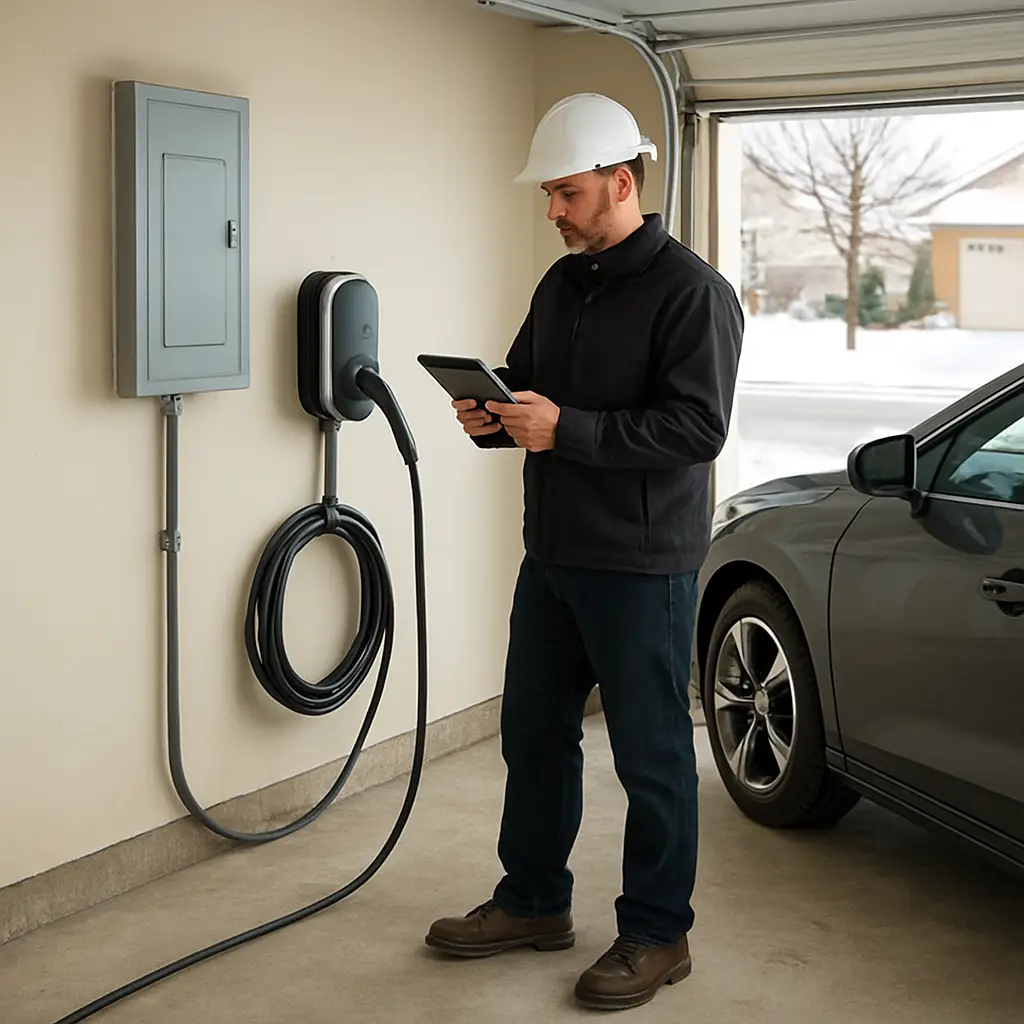
Plan charging around your home, garage, and driving routine
EV charger assessments and installations can be planned for homes across Regina and nearby communities, including attached garages, detached garages, exterior parking, renovations, and future second-vehicle charging.
For general residential wiring and capacity support, review our residential electrician in Regina page or browse the broader electrical service area.
Request an EV charger installation quote in Regina
Send the address, vehicle and charger information, panel photos, parking location, desired charging speed, and preferred timing. The project can then be reviewed for circuit routing, panel capacity, load management, permit requirements, and the most practical installation plan.